מגן דוד · Shield of David

Martial geometry.
Embodied.

The Magen David Method is the organizing geometry of Three Temples Krav Maga / Close-Quarters Combat: triangles, stepping, simultaneous protection and response, three connected ranges, and one ethical responsibility to preserve life.

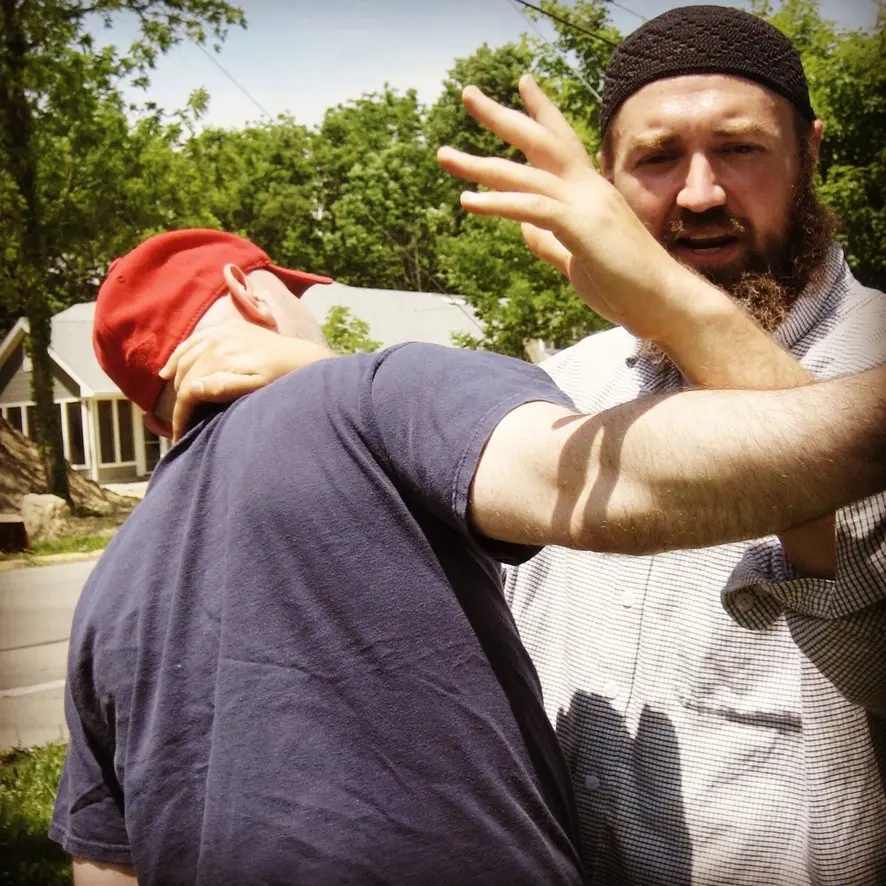
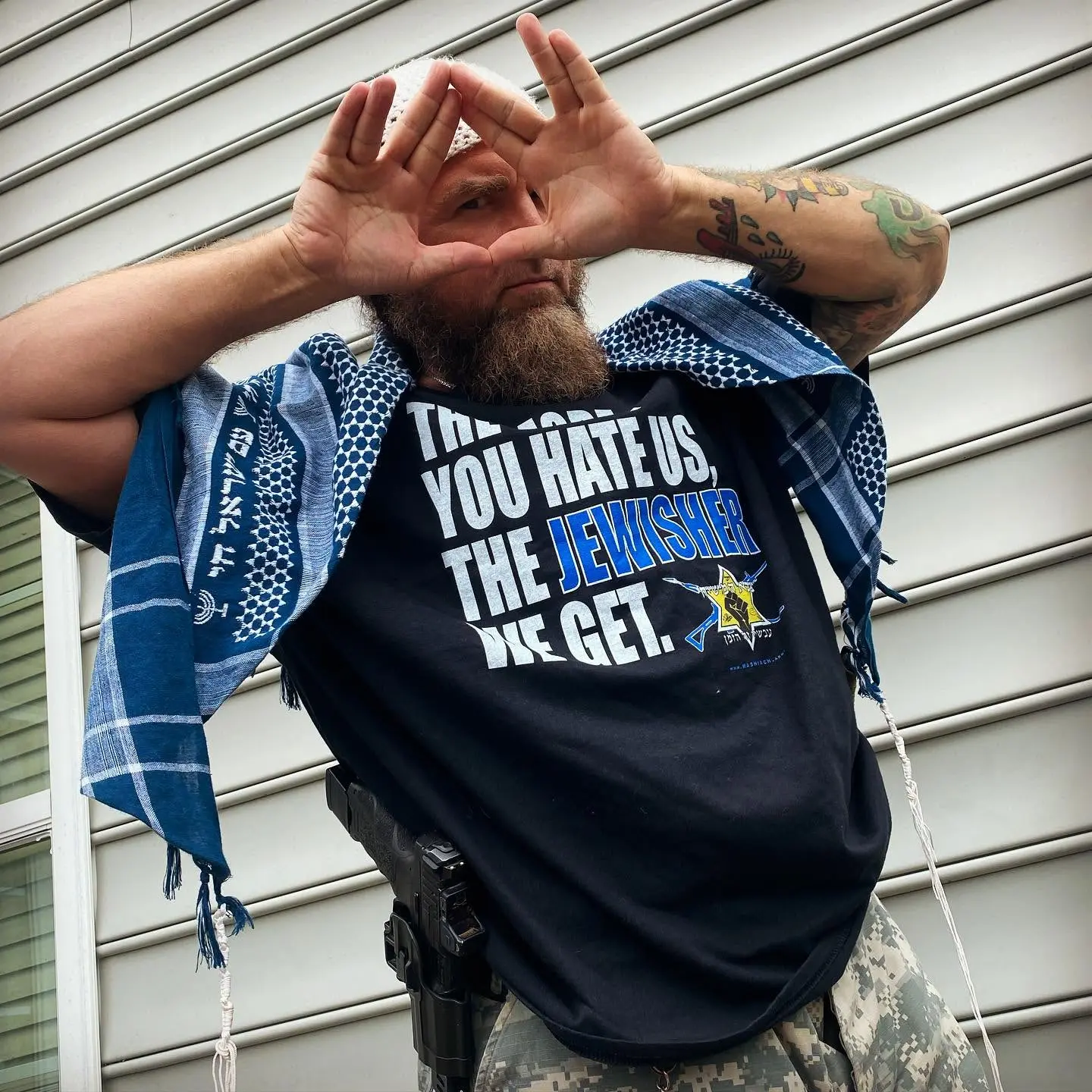
Dr. Micah Naziri demonstrating triangular close-quarters structure with a partner

Symbol · covenant · embodied method

Magen David: two triangles, seven fields, one living responsibility.

The six-pointed Jewish star is formed by two overlaid equilateral triangles—one ascending and one descending. Its Hebrew name, Magen David (מָגֵן דָּוִד), means the “Shield of David.” Three Temples begins with the symbol’s Jewish religious meaning before asking how its relationships may be walked, trained, and embodied.

The three knots

The Holy One. Torah. Israel.

Zohar 3:73a speaks of “three knots” joining the Holy One, Torah, and Israel. Each corner of a triangle connects with both of the others: Torah study and observance do not manufacture the bond between the Jewish soul and its Creator; they make an existing bond visible.

A kabbalistic reading further sees an inner and an outer dimension in each: the revealed and concealed dimensions of the Divine, exoteric and esoteric Torah, and the soul expressed in the body together with the soul’s transcendent root. The doubled triangle therefore becomes a relationship between inner and outer life—not an ornament detached from practice.

Read the kabbalistic source essay

“From my flesh I perceive G‑d.”

Iyov / Job 19:26

Six points around a center

The seven fields of the star.

01 · Upper right

Chesed

Kindness

02 · Upper left

Gevurah

Strength / restraint

03 · Upper center

Tiferet

Harmony

04 · Lower right

Netzach

Perseverance

05 · Lower left

Hod

Splendor / humility

06 · Center

Yesod

Foundation

07 · Lower point

Malchut

Royalty / responsible action

In this kabbalistic map, the six projecting fields surround yesod, foundation. Malchut receives and brings the higher attributes into lived action. For Three Temples, that descent into action matters: symbolism must become character, mitzvah, trained judgment, and service.
Two triads · one complete practice

Cultivation and responsibility.

Inner formation

Spirit.Body.Community.

Spirit gives direction. Body develops capability. Community gives capability a purpose beyond the isolated self.

Protective application

Self.Family.Community.DEFENSE.

Responsibility begins with the person, extends through family, and matures as the disciplined protection of congregation and community.

רוח · גוף · קהילה
Mishpachah. Yachad. Qohelet.

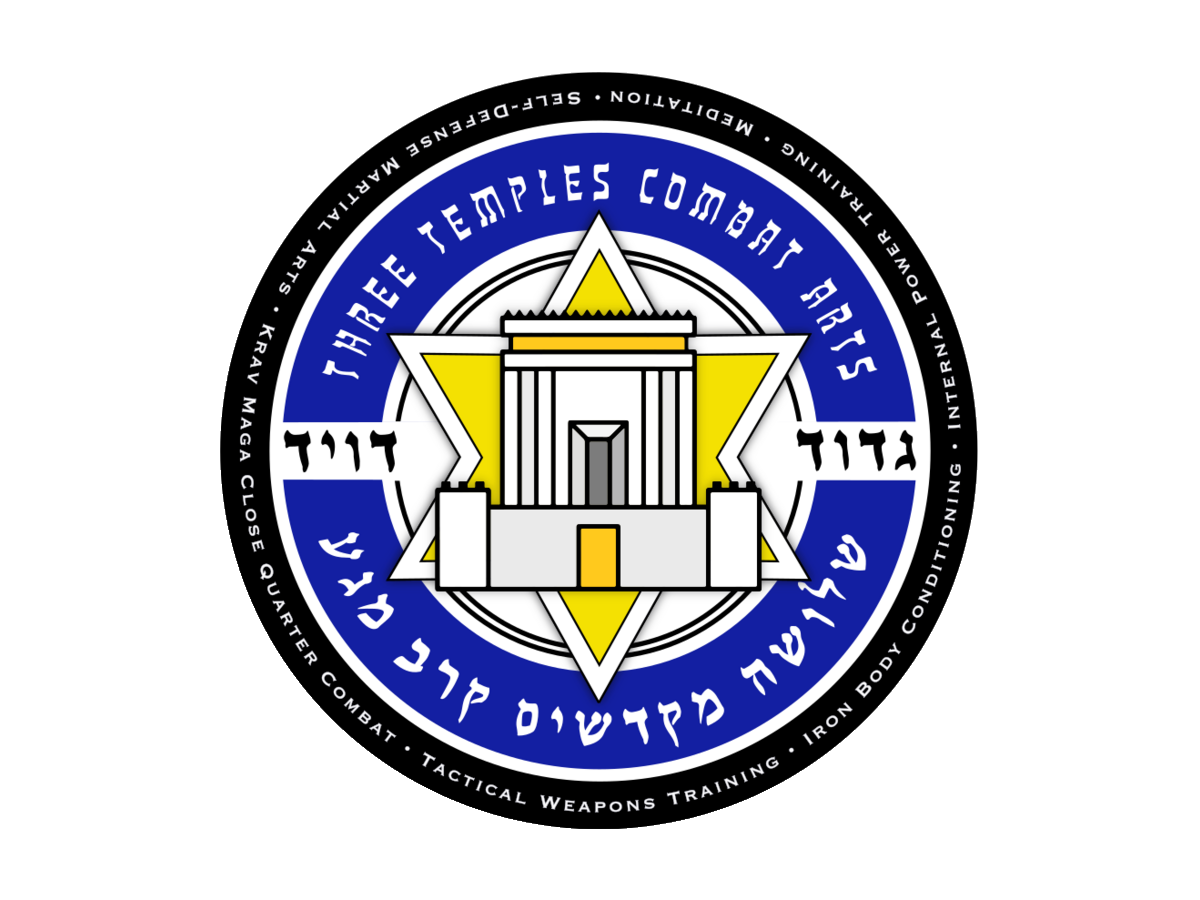
Three Temples emblem uniting the Temple and Magen David

A lineage-based reconstruction

The “Shield” of David Ha-Melekh.

Within the oral account transmitted through the Tariqat ʿIsawiyah and interpreted by Dr. Naziri, the Magen David is approached not only as a sign viewed by the eye but as a shield made through the body: interlocking lines of protection, movement, and response associated with David Ha-Melekh, King David.

Three Temples presents the method as a restoration and reconstruction of that Israelite martial idea through decades of lived training. It does not claim that modern Taijiquan, Kali, Silat, or other named systems are themselves ancient Israelite arts. Their transmitted mechanics provide laboratories through which the remembered geometry can be tested, clarified, and embodied inside a contemporary Krav Maga / CQB curriculum.

In this school, Magen David geometry is treated as the culminating organizational knowledge—the pinnacle—of the Close-Quarters Combat method: not a single trick, but a way of understanding the relationships among body, line, range, tool, terrain, timing, and responsibility.

Text, Midrash, and oral transmission

From Eden to Judah—and from inherited story to martial reconstruction.

Rabbinic literature preserves a dramatic chain of garments, power, violence, and succession. Traditions associate Adam’s garments with Noah, Ḥam, Kush, and Nimrod; the Talmud recounts Esau killing Nimrod; another midrashic tradition places Judah in lethal conflict with Esau. Three Temples reads that narrative beside an ʿIsawiyah oral tradition in which a shield and its geometry pass into Judah’s line and are ultimately transformed under David Ha‑Melekh.

The textual and oral layers are kept distinct. The cited rabbinic passages do not themselves provide an archaeological history of a six-pointed shield, nor do they explicitly identify the garments as bearing a hexagram. The connection to a Magen David martial method is Dr. Naziri’s lineage-based interpretive reconstruction: a story of power wrested from tyranny, disciplined by covenant, and redirected toward justice and protection.

Read in that register, the saga moves from Eden to Nimrod, Esau, Judah, and David as a meditation on the use and misuse of power. It is not offered as conventional academic provenance for the modern Jewish emblem. It is the mythic and ethical memory within which the Three Temples method understands “shield.”

Closed-door transmission

The Sicarri method.

Dr. Naziri describes the Sicarri method as martial geometry carried for generations within the ʿOssiyim / ʿIsawiyah Jewish Yachad and Tariqah. It is not presented as a public “style.” Its governing idea is economy: expend less, produce more useful effect, and arrive on the decisive line before the attacker’s action connects—not by racing for speed, but by controlling geometry.

Associated training includes structured exercises, Iron Body and power development, meditation, and ethical discipline. The actual closed-door curriculum is not published or taught openly. Public Three Temples instruction presents responsibly teachable principles; admission to restricted material is by relationship, vetting, maturity, and invitation.

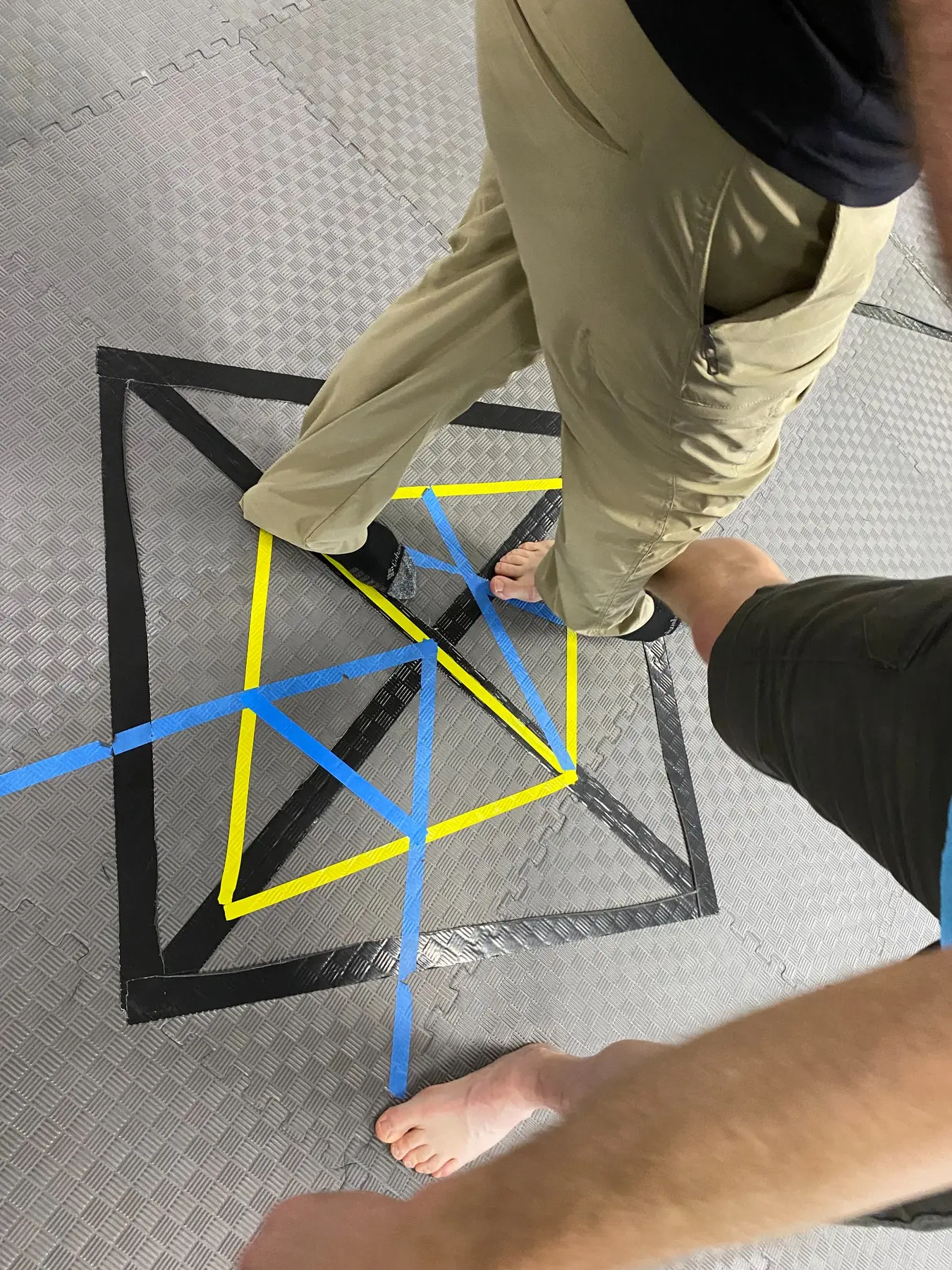
Taped triangles and Magen David geometry on a training floor beneath practitioners' feet
Taped floor study · geometry made walkable

Tiga · triangles · langkah

The diagram becomes a path.

Tape on the floor makes invisible relationships visible. The interlocking triangles show possible lines of entry, exit, interception, redirection, flanking, rooting, and recovery. Students do not stand on a logo; they learn to travel through a field of choices.

In Silat vocabulary, langkah is stepping pattern and tactical pathway. The Indonesian word tiga means “three,” and the triangular patterns used in training connect angle, base, direction, and timing. Three Temples places these pathways in conversation with the interlocking triangles of the Magen David, Chinese internal structure, and Krav Maga’s immediate protective purpose.

“Martial trigonometry” names the practical study of those changing relationships: where force begins, which angle reduces exposure, how a base is reorganized, and how the shortest responsible line is found while both bodies continue moving.

Dr. Micah Naziri forming intersecting triangular geometry with his hands
The same relationships carried from the floor into the hands

The method beneath the techniques

Four geometric principles.

01

Upper and lower triangles

Upper-body protection, lower-body stepping, and striking lines are organized as interdependent triangles rather than unrelated techniques.

02

Simultaneous defense and response

The geometry seeks one coordinated event: intercept, protect, enter, and answer without separating defense from action.

03

Minimum necessary movement

Efficiency is measured by what can be removed. The threat departs first, yet trained position arrives first.

04

Three-dimensional structure

The symbol is not treated as a flat diagram. Angles, planes, spirals, height, rotation, and pressure must be embodied in moving space.

Krav Maga Hashlem · public curriculum map

Twelve method families.

The old Chinese seminar titles are retained in archival material where they identify their respective systems and cultural contexts. Here, the current CQB curriculum is stated plainly in English.
  1. 01

    Locks, throws, break-falls, ground control, and recovery

  2. 02

    Kicking changes and lower-body interception

  3. 03

    Hands, elbows, frames, and close-range striking

  4. 04

    Angular, hidden-step, and flanking footwork

  5. 05

    Internal-family structure and integrated empty hand

  6. 06

    Straight-blade relationships and responsible defense

  7. 07

    Double-tool coordination and ambidextrous structure

  8. 08

    Shotgun relationships inside close quarters

  9. 09

    Rifle relationships inside close quarters

  10. 10

    Concealed-carry pistol context, access, and movement

  11. 11

    Cumulative flow: connecting what was previously learned

  12. 12

    The enduring method: lifelong refinement and transmission

This public map names areas of study; it does not disclose restricted Sicarri exercises or provide weapons instruction outside supervised, lawful training.

Heaven · Human · Earth

Three ranges. One continuous problem.

HeavenLong range

Awareness, position, distance, movement, interception, and entry before the close.

HumanClose quarters

Striking, trapping, clinch work, elbows, knees, controls, and decisive action inside immediate range.

EarthBalance and ground

Off-balancing, throws, sweeps, takedowns, pins, grappling, recovery, and return to the feet.

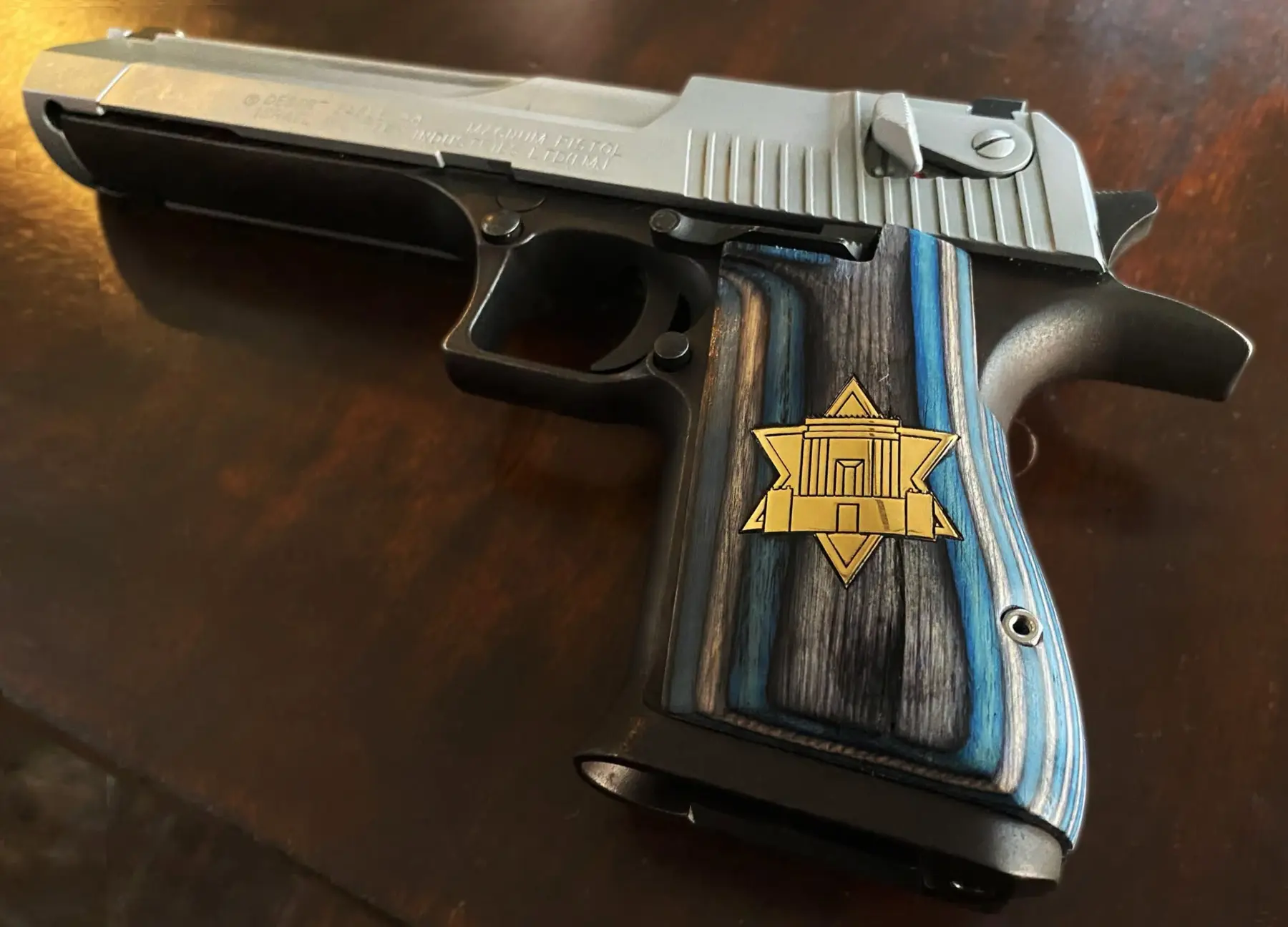
Defensive sidearm bearing the Three Temples Temple-and-Magen-David emblem

One geometry across changing tools

Empty hand, blade, stick, sword, and firearm.

Distance, legality, risk, and mechanics change with every tool. The shared questions remain: line, angle, structure, protection, timing, movement, cover, control, and the responsibility to act only as necessary. Training is proportioned to experience, venue, local law, safety, and demonstrated judgment.

Self.Family.Community.DEFENSE.

רוח · גוף · קהילה

Spirit. Body. Community.

The geometry is complete only when disciplined spirit directs a capable body toward family, congregation, and community responsibility.

Self.Family.Community.DEFENSE.